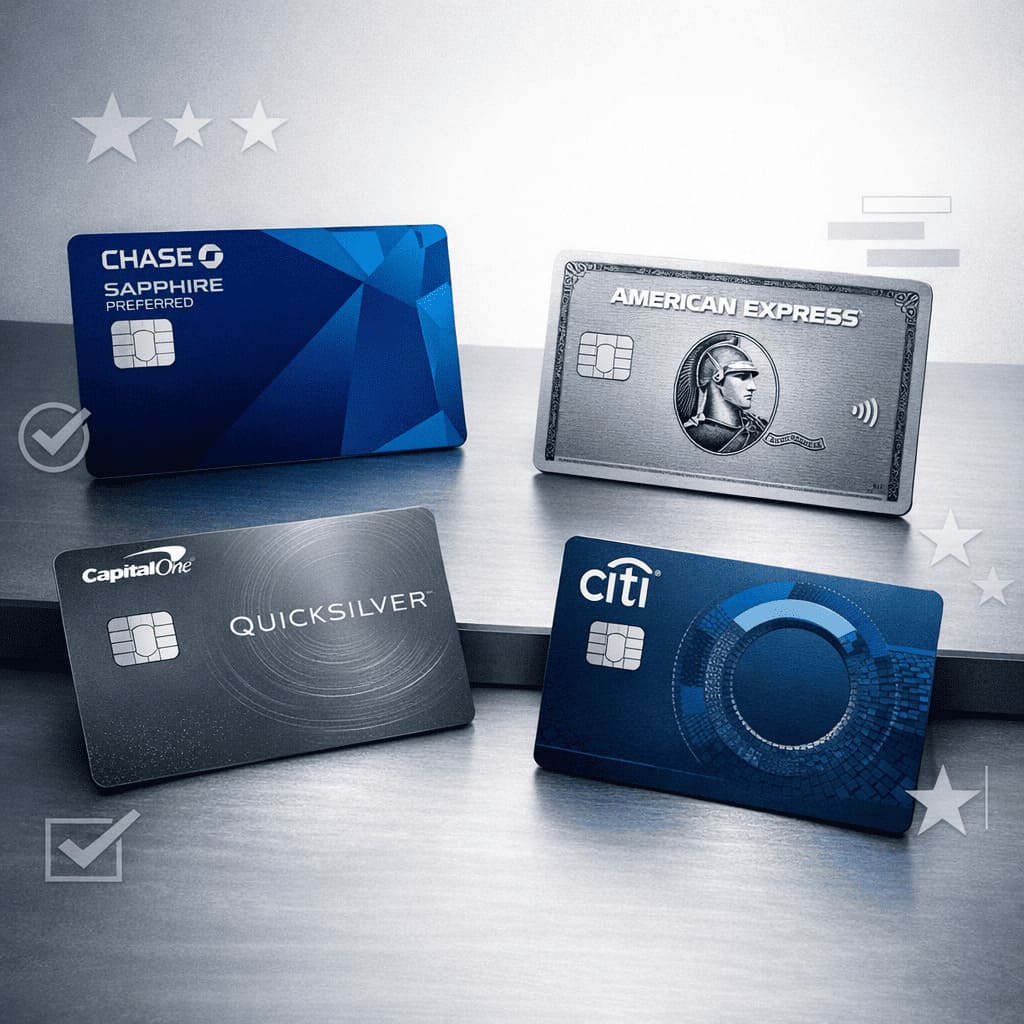
Cashback credit cards deliver straightforward value without complicated point transfers or redemption rules. Your rewards appear as statement credits or direct deposits into your bank account.
Advertisement
The Citi Double Cash, Chase Freedom, and Capital One Savor represent three distinct approaches to cashback rewards. Understanding their differences helps you maximize returns based on your actual spending patterns.
Citi Double Cash Simplicity Wins
The Citi Double Cash earns two percent on everything through a unique split structure. You get one percent when making purchases and another one percent when paying your bill.
This straightforward earning eliminates category tracking or quarterly activation requirements. Whether you’re buying groceries, gas, or electronics, the two percent rate applies consistently across all spending.
Chase Freedom Rotating Categories
Chase Freedom Flex earns five percent cashback on rotating quarterly categories up to $1,500 spending limits. Categories rotate between grocery stores, gas stations, restaurants, and online shopping throughout the year.
You must activate bonus categories each quarter through the Chase website or mobile app. Forgetting activation means earning just one percent instead of five percent on valuable bonus spending.
Capital One Savor for Dining
The Capital One Savor earns four percent on dining and entertainment purchases. This industry-leading rate applies to restaurants, bars, fast food, and popular streaming services without spending caps.
Grocery stores earn three percent while everything else gets one percent. The $95 annual fee requires significant dining spending to justify, roughly $2,400 annually in restaurants to break even.
Understanding Flat-Rate Rewards
Flat-rate cards like Citi Double Cash eliminate decision fatigue about which card to use. Your two percent return applies everywhere, making every purchase straightforward without mental calculations.
Category cards require strategic planning and spending tracking. You’ll maximize returns only by remembering which categories earn bonus rates and staying within quarterly spending limits.
Building Credit Limits With Citi
Citi evaluates your income, existing debt obligations, and credit history when setting initial limits. New cardholders with good credit typically receive limits between $3,000 and $10,000 depending on income verification.
Your credit utilization ratio significantly impacts future limit increases. Keeping balances below thirty percent signals responsible use, while staying under ten percent demonstrates excellent financial management.
Chase Limit Increase Strategies
Chase rewards consistent card usage without carrying balances month to month. Making multiple small payments throughout the billing cycle keeps utilization low while demonstrating active engagement.
Requesting credit limit increases every six to twelve months becomes possible after establishing positive payment history. Chase allows online requests that sometimes approve instantly based on automated underwriting reviewing your account.
Capital One’s Growth-Friendly Approach
Capital One often approves credit limit increases more readily than other major issuers. They periodically review accounts automatically and grant increases without requiring formal requests from cardholders.
Updating your income through the online portal prompts Capital One to reassess creditworthiness. Many cardholders receive automatic limit increases shortly after reporting salary raises or additional income sources.
Payment Timing Affects Your Profile
Paying before your statement closes keeps reported balances minimal on credit reports. Bureaus receive statement balance information, not actual spending, so strategic timing protects your credit score.
Never carrying balances month to month shows financial discipline that all issuers reward. Interest charges indicate financial stress, while paid-in-full statements suggest comfortable cash flow deserving higher limits.
What Reduces Your Credit Limits
Late payments trigger immediate red flags across all three issuers. Even one missed payment can result in limit reductions, interest rate increases, and blocked future increase requests.
High credit utilization suggests financial stress rather than responsible management. Carrying balances approaching your limits makes issuers hesitant to extend additional credit regardless of payment history.
Discover It Cash Back Alternative
The Discover It Cash Back matches your entire first year cashback as a signup bonus. This effectively doubles all rewards during year one, creating exceptional value for new cardholders.
Discover rotates bonus categories similar to Chase Freedom Flex. The five percent categories require quarterly activation but offer valuable earning opportunities on everyday spending.
Bank of America Customized Cash
Bank of America lets you choose your own three percent category from options including online shopping, dining, or gas stations. This customization adapts to your personal spending priorities.
Preferred Rewards members earn up to 5.25 percent in their chosen category. The bonus requires maintaining qualifying Bank of America deposit or investment account balances.
Wells Fargo Active Cash Simplicity
Wells Fargo Active Cash earns two percent on everything without the split structure Citi uses. Your rewards accumulate with each purchase rather than requiring bill payments to unlock the second percent.
The card includes a lengthy intro APR period on purchases and balance transfers. This combination of strong cashback and financing flexibility appeals to consumers managing larger expenses.
American Express Blue Cash Preferred
The Amex Blue Cash Preferred earns six percent at U.S. supermarkets up to $6,000 annually. Grocery spending typically represents substantial household expenses, making this rate extremely valuable.
Gas stations earn three percent while streaming services get six percent. The $95 annual fee requires roughly $3,167 in annual grocery spending to surpass the fee-free Blue Cash Everyday version.
US Bank Cash Plus Customization
US Bank Cash Plus lets you select two five percent categories each quarter from options including electronics, sporting goods, or department stores. This flexibility targets specific spending needs.
The $2,000 quarterly limit per category constrains high spenders but protects the bank from excessive payouts. Two percent earning on gas and grocery spending provides decent baseline returns.
Calculating Your Optimal Card Mix
Analyze three months of spending across major categories to determine which cards maximize returns. Many consumers benefit from carrying multiple cashback cards targeting different spending categories.
Pairing Citi Double Cash for general spending with Chase Freedom for rotating categories creates comprehensive coverage. Adding Capital One Savor makes sense only if dining spending justifies the annual fee.
Annual Fee Justification Math
Cards charging annual fees require significant category spending to deliver positive value. The Capital One Savor needs roughly $2,375 in dining spending annually to break even versus free alternatives.
Calculate your actual restaurant spending including takeout, delivery services, and bars. If you’re spending $200 monthly on dining, the Savor delivers approximately $96 net value after the fee.
Zero Percent Intro APR Periods
Chase Freedom Flex offers fifteen months at zero percent APR on purchases and balance transfers. This lengthy promotional period helps consolidate existing debt or finance large purchases interest-free.
Wells Fargo Active Cash provides similar intro periods while maintaining strong ongoing cashback rates. These combinations work beautifully for consumers needing both rewards and financing flexibility.
Balance Transfer Fee Considerations
Most cashback cards charge three to five percent balance transfer fees. Calculate whether these fees exceed the interest savings before moving balances from other cards.
Some cards occasionally offer zero percent balance transfer fees during promotional periods. These rare opportunities deliver maximum value when consolidating high-interest debt onto new cards.
Foreign Transaction Fee Policies
Capital One eliminated foreign transaction fees across their entire card lineup including the Savor. This consumer-friendly policy saves three percent on international purchases and foreign currency transactions.
Citi and Chase charge foreign fees on most cashback cards but waive them on premium travel cards. Consider carrying a no-foreign-fee card specifically for international spending.
Cashback Redemption Options
Citi allows redeeming cashback as statement credits, direct deposits, or checks once you accumulate meaningful balances. The redemption process stays straightforward without minimum thresholds or expiration dates.
Chase deposits cashback directly into Chase checking accounts or applies it to statement balances. Capital One offers similar flexibility with additional options to redeem toward travel purchases.
Authorized User Benefits
Adding authorized users helps family members build credit while earning cashback on their spending. All three issuers report authorized user accounts to credit bureaus, helping young adults establish credit history.
Monitor authorized user spending carefully to maintain low utilization ratios. Their purchases count toward your total balance and affect your credit utilization calculations.
Purchase Protection Coverage
Chase provides ninety days of purchase protection covering damage or theft up to $10,000 per claim. Extended warranty protection adds one year to manufacturer warranties on eligible purchases.
Citi matches these protections on the Double Cash card. Capital One reduced purchase protections in recent years, offering more limited coverage than Chase or Citi.
Credit Score Requirements
Citi Double Cash typically requires good to excellent credit scores above 670. Chase Freedom cards show similar standards, focusing on applicants with established positive credit histories.
Capital One Savor targets excellent credit applicants above 700 due to the premium annual fee and high earning rates. Pre-qualification tools help gauge approval odds before formal applications.
Pre-Approval Tools Worth Using
All three issuers offer pre-qualification tools indicating likely approval without hard inquiries. These soft pulls help gauge approval odds before formally applying and risking denial.
Pre-approved offers sometimes include enhanced signup bonuses unavailable through public applications. Checking these tools monthly costs nothing and occasionally reveals valuable targeted opportunities.
Combining Multiple Cashback Cards
Sophisticated users carry cards from multiple issuers to maximize returns across all spending categories. Citi for baseline spending, Chase for rotating categories, Capital One for dining creates comprehensive coverage.
Managing multiple cards requires tracking spending and ensuring you’re using the optimal card for each purchase. Mobile wallet organization helps by assigning specific cards to different merchant categories.
Mobile App Experience Quality
Chase offers the most polished mobile banking experience with intuitive interfaces and comprehensive features. Viewing rewards, tracking spending, and activating quarterly categories all work seamlessly.
Citi’s app functions adequately but feels less modern than Chase or Capital One. Capital One provides excellent spending insights and budgeting tools integrated into their mobile experience.
Customer Service Comparison
Chase provides solid customer service through dedicated phone lines and secure messaging. Response times typically stay reasonable, and representatives handle routine issues competently.
Citi receives mixed reviews for customer service quality and response times. Capital One maintains strong service ratings with helpful representatives and efficient problem resolution processes.
Fraud Protection Features
All three issuers provide zero liability fraud protection and sophisticated monitoring systems. Real-time transaction alerts through mobile apps help catch unauthorized charges within minutes.
Virtual card numbers for online shopping add security layers. Capital One pioneered this feature, and Chase recently added similar functionality to compete with modern security expectations.
Maximizing Long-Term Value
Your cashback strategy should evolve as spending patterns change over time. Young professionals might prioritize flat-rate cards initially, then add category cards as spending increases.
Review your card portfolio annually to ensure earning structures still match your spending. Don’t hesitate to switch cards if your habits change or better options emerge.
Making Your Final Choice
Choose Citi Double Cash if you want simplicity and solid returns everywhere without tracking categories. The two percent flat rate delivers consistent value across all spending.
Select Chase Freedom if you’re willing to activate quarterly categories and maximize rotating bonus opportunities. Pick Capital One Savor only if dining spending exceeds $2,400 annually.