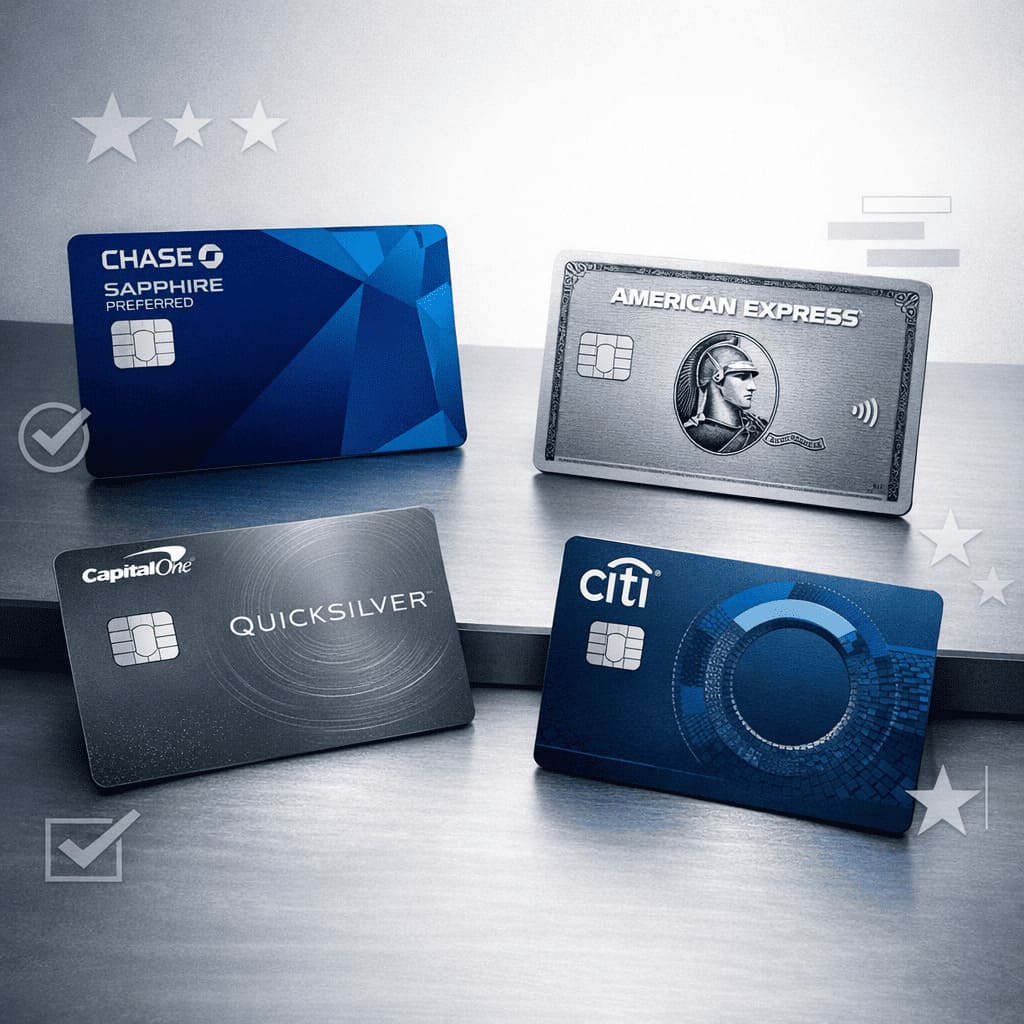
Premium travel cards transform your spending into flights, hotel stays, and exclusive experiences worldwide. Annual fees feel steep until you experience the perks firsthand.
Advertisement
The Chase Sapphire Reserve, Capital One Venture X, and Bank of America Premium Rewards compete directly for frequent travelers. Each card delivers substantial value through different benefit structures and earning strategies.
Annual Fee Investment Analysis
Chase Sapphire Reserve costs $550 yearly while Capital One Venture X charges $395. Bank of America Premium Rewards sits at $95, making it the most accessible premium option.
The lower entry point doesn’t mean inferior benefits with Bank of America. Their card delivers solid rewards and protections for travelers unwilling to commit to higher annual fees initially.
Travel Credits That Actually Work
Sapphire Reserve provides a $300 annual travel credit applying automatically to any travel purchase. Airlines, hotels, parking, tolls, and rideshares all trigger the credit without manual activation.
Capital One Venture X offers $300 in annual travel credits through their portal booking system. You’ll also receive a $100 credit toward TSA PreCheck or Global Entry enrollment fees.
Bank of America Preferred Rewards Bonus
Bank of America Premium Rewards earns up to 2.625 points per dollar on travel and dining for Preferred Rewards Platinum Honors members. This elite status requires maintaining $100,000 in combined Bank of America deposit and investment accounts.
The tiered bonus system rewards existing Bank of America customers who consolidate their banking relationships. Even Gold status at $20,000 balances boosts earning rates to 1.875 points per dollar.
Points Earning Structures Compared
Chase awards three points per dollar on travel and dining after the annual credit. You earn ten points per dollar on hotels and car rentals through Chase Travel Portal.
Capital One earns two miles per dollar on everything without category restrictions. The simplicity appeals to travelers tired of tracking bonus categories or remembering which card to use.
Transfer Partner Networks
Chase partners with ten airline programs including United, Southwest, and Air France KLM. Hotel transfers work with Hyatt, IHG, and Marriott at one-to-one ratios.
Capital One works with fifteen airline transfer partners and three hotel programs. Their exclusive partnership with Turkish Airlines opens award availability that Chase and Amex cardholders can’t access directly.
Airport Lounge Access Benefits
Both Chase and Capital One provide Priority Pass Select membership with unlimited guest access. Capital One adds their own Capital One Lounges at major airports including Dallas and Denver.
Chase Sapphire Reserve members access Priority Pass lounges worldwide but lack proprietary lounge spaces. Bank of America Premium Rewards doesn’t include complimentary lounge access, a significant limitation for frequent flyers.
Building Credit Limits With Chase
Chase evaluates your income, existing credit relationships, and spending patterns when setting initial limits. New Sapphire Reserve cardholders with excellent credit typically receive limits between $10,000 and $30,000.
Your overall relationship with Chase matters significantly for premium cards. Maintaining checking accounts or holding other Chase credit products demonstrates financial stability that underwriters consider favorably.
Credit Utilization Best Practices
Keeping balances below thirty percent of your limit signals responsible card use to issuers. Staying under ten percent looks even better and often correlates with automatic limit increases.
Making multiple payments throughout each billing cycle keeps utilization ratios low. This strategy works especially well when booking expensive travel that temporarily pushes balances higher than usual.
Payment Timing Strategies
Paying before your statement closes keeps reported balances minimal on credit reports. Bureaus receive statement balance information, not actual spending totals, so strategic timing protects scores.
Never carrying balances month to month demonstrates financial discipline that all issuers reward. Interest charges indicate financial stress while paid-in-full statements suggest comfortable cash flow deserving higher limits.
Requesting Limit Increases
Chase allows online credit limit increase requests every six months after establishing positive payment history. Many requests approve instantly through automated underwriting reviewing account behavior and credit profiles.
Capital One often grants automatic limit increases without requiring formal requests from cardholders. They periodically review accounts and raise limits for users maintaining excellent payment records and low utilization.
Income Updates Trigger Reviews
Reporting salary increases through your online account prompts issuers to reassess creditworthiness. Many cardholders receive automatic limit increases shortly after updating income information accurately.
Bank of America particularly rewards customers who consolidate banking relationships. Your deposit account balances, investment portfolios, and credit card payment history create comprehensive financial profiles for underwriting decisions.
What Reduces Your Limits
Late payments trigger immediate red flags that can result in limit reductions. Even one missed payment affects future increase eligibility and may prompt issuers to lower existing limits.
High credit utilization suggests financial stress rather than responsible management. Carrying balances approaching your limits makes issuers hesitant to extend additional credit regardless of perfect payment history.
Hotel Elite Status Programs
Chase Sapphire Reserve doesn’t provide automatic hotel elite status with any chains. You’ll earn points on hotel stays but won’t receive upgrades or other perks without separate loyalty program effort.
Capital One Venture X grants automatic Hertz President’s Circle status but lacks hotel elite benefits. Bank of America Premium Rewards similarly omits hotel status, focusing instead on flexible points redemptions.
Rental Car Insurance Coverage
Chase includes primary rental car insurance up to $75,000 worldwide on the Sapphire Reserve. This coverage means you can decline counter insurance completely, saving substantial money.
Capital One provides primary rental coverage when you decline the rental company’s insurance. Bank of America offers secondary coverage requiring your personal auto insurance to pay claims first.
Travel Delay Protection
All three cards provide trip delay insurance reimbursing meals and accommodations when flights delay six or more hours. Coverage limits range from $500 to $1,500 per person depending on the card.
Trip cancellation and interruption insurance covers up to $10,000 per trip when you purchase travel with your card. These protections prove valuable during weather disruptions or family emergencies.
Purchase and Baggage Protection
Chase provides ninety days of purchase protection covering damage or theft up to $10,000 per claim. Extended warranty protection adds one year to manufacturer warranties automatically.
Capital One matches these protections with similar coverage limits and conditions. Bank of America offers purchase protection with lower coverage limits but still protects most everyday purchases adequately.
Foreign Transaction Fee Policies
None of these premium cards charge foreign transaction fees on international purchases. This seemingly small detail saves three percent on every transaction abroad or with foreign merchants.
Global acceptance varies slightly between Visa and Mastercard networks. Chase Visa enjoys nearly universal acceptance while Capital One Visa matches this reliability internationally.
Points Redemption Flexibility
Chase Ultimate Rewards points transfer to partners instantly and maintain 1.5 cents value through their travel portal. This guaranteed floor value protects you when transfer partners don’t match needs.
Capital One miles redeem at one cent each toward travel purchases or transfer to partners. The flexibility between cashback-style redemptions and transfers provides genuine strategic choice.
Bank of America Travel Booking
Bank of America Premium Rewards points redeem for travel statement credits or transfer to airline partners. The redemption value stays consistent at one cent per point for travel purchases.
You can also redeem points as cashback at slightly reduced values. This flexibility makes the card useful even during periods when you’re not traveling frequently.
Annual Fee Justification Math
Sapphire Reserve requires roughly $5,000 in annual travel and dining spending to break even after the travel credit. That’s approximately $416 monthly in bonus categories to justify the fee.
Venture X needs less category optimization since everything earns two miles per dollar. The effective $95 fee after credits makes justification easier for consistent spenders.
Credit Score Requirements
All three premium cards target applicants with excellent credit scores above 740. Chase emphasizes recent credit history through their informal five-twenty-four rule blocking excessive applications.
Bank of America shows flexibility for existing customers with strong banking relationships. Capital One focuses on income verification and existing debt obligations during underwriting.
Strategic Application Timing
Apply for Chase cards first if planning multiple premium cards. Their five-twenty-four rule counts all new credit cards from any issuer potentially blocking approval.
Bank of America and Capital One applications face fewer blanket restrictions based on recent accounts. Many enthusiasts hold multiple premium cards, using each where it earns strongest rewards.
Pre-Approval Tools Benefits
All three issuers offer pre-qualification tools indicating likely approval without hard inquiries. These soft pulls help gauge approval odds before formally applying and risking denial.
Pre-approved offers sometimes include enhanced signup bonuses unavailable through public applications. Checking these tools monthly costs nothing and occasionally reveals valuable targeted opportunities.
Combining Multiple Travel Cards
Sophisticated travelers carry cards from multiple issuers to maximize rewards and benefits. Chase for dining and travel, Capital One for simplicity, Bank of America for banking relationships creates comprehensive coverage.
Managing multiple premium cards requires tracking annual fees and ensuring spending justifies costs. Start with one card, master its benefits, then expand strategically to additional issuers.
Cell Phone Protection Benefits
Chase Sapphire Reserve provides cell phone protection covering damage or theft up to $800 per claim. You must pay your monthly cell phone bill with the card to activate coverage.
Capital One Venture X offers similar phone protection with comparable coverage limits. Bank of America Premium Rewards lacks this benefit, a minor disadvantage for cardholders seeking comprehensive protection.
Priority Pass Restaurant Credits
Priority Pass membership includes restaurant credits at select airport locations. You can use credits at participating restaurants when lounges feel crowded or don’t match preferences.
The restaurant program varies by airport and changes periodically. Check the Priority Pass app before travel to see available locations and current credit amounts.
Customer Service Quality
Chase provides dedicated premium card phone lines with short wait times. Representatives handle complex travel issues competently, though service quality varies by representative.
Capital One maintains strong customer service ratings with helpful representatives. Bank of America offers adequate support but generates fewer passionate advocates than Chase or Capital One.
Mobile App Experience
Chase delivers the most polished mobile banking experience with intuitive interfaces. Viewing rewards, tracking spending, and accessing benefits all work seamlessly through their app.
Capital One’s app includes excellent spending insights and travel booking integration. Bank of America provides functional apps but lags slightly behind Chase and Capital One in user experience.
Making Your Final Decision
Choose Chase Sapphire Reserve if you value flexible transfer partners and dine out frequently. The comprehensive benefits justify the fee for travelers spending heavily on restaurants.
Select Capital One Venture X if you prefer earning simplicity without category tracking. Pick Bank of America Premium Rewards if you’re building banking relationships or prefer lower annual fees.