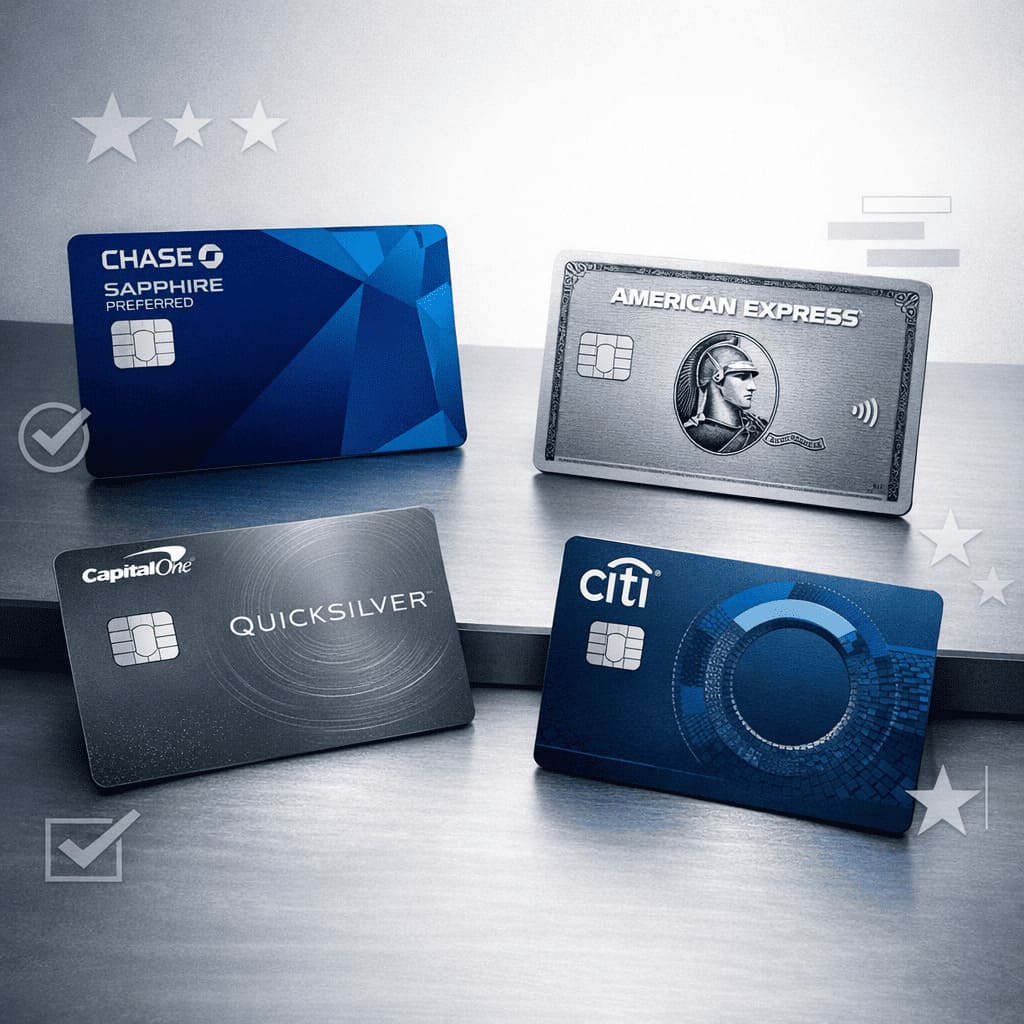
Business credit cards separate personal and business expenses while building rewards on operational spending. Choosing wisely maximizes cash flow benefits and simplifies tax preparation significantly.
Advertisement
The Chase Ink Business Preferred, Amex Business Gold, and Capital One Spark Cash dominate the business card market. Each serves different business models through specialized rewards structures and spending categories.
Chase Ink Business Preferred Rewards
The Ink Business Preferred earns three points per dollar on substantial business categories. Shipping, internet, cable, phone services, and advertising on social media and search engines all earn bonus rates.
Travel purchases earn three points per dollar while everything else gets one point. The $95 annual fee stays reasonable for businesses spending heavily in bonus categories throughout the year.
Amex Business Gold Category Flexibility
American Express Business Gold delivers four points per dollar on your top two spending categories each billing cycle. Categories include advertising, gas stations, restaurants, and shipping automatically without manual selection.
This dynamic earning structure adapts to changing business needs throughout the year. Seasonal businesses particularly benefit when spending patterns shift between advertising campaigns and operational expenses.
Capital One Spark Cash Simplicity
Spark Cash earns two percent cashback on everything without category restrictions or spending caps. This straightforward structure eliminates tracking requirements and works perfectly for businesses with diverse expense profiles.
The $95 annual fee justifies itself quickly when business spending exceeds $4,750 annually. Capital One also offers a no-fee Spark Cash version earning 1.5 percent for lower-spending businesses.
Understanding Business Credit Limits
Chase evaluates business revenue, time in business, and personal credit history when setting initial limits. New business cardholders typically receive limits between $5,000 and $25,000 depending on stated business income.
Your personal credit score matters significantly even for business cards. Most issuers require personal guarantees, making your individual creditworthiness essential for approval and limit determination.
Building Higher Business Limits
Consistent card usage without carrying balances demonstrates reliable business cash flow management. Making payments before statement closing dates keeps utilization ratios low across both business and personal credit profiles.
Business credit limit increases often happen automatically every six to twelve months for accounts maintaining excellent payment records. Chase and American Express particularly reward businesses showing steady spending growth.
Revenue Reporting Strategies
Accurately reporting business revenue and expenses helps justify higher credit limits during applications and increase requests. Issuers verify stated income through business tax returns or bank statements when extending substantial credit.
Updating your business income through online account portals prompts issuers to reassess creditworthiness. Many business owners receive automatic limit increases shortly after reporting revenue growth or expanded operations.
Payment Timing For Business Cards
Paying business card balances before statement closing protects both business and personal credit scores. Most business cards report to personal credit bureaus, making strategic payment timing essential for maintaining excellent scores.
Never carrying balances month to month shows strong business cash flow that issuers reward. Interest charges suggest financial stress, while paid-in-full statements demonstrate stable operations deserving higher limits.
What Reduces Business Credit Limits
Late payments trigger immediate concerns about business financial health. Even one missed payment can result in limit reductions and blocked future increase requests across business accounts.
High credit utilization indicates cash flow problems rather than strategic spending. Carrying balances approaching your limits makes issuers hesitant to extend additional credit regardless of payment history.
Chase Ink Transfer Partners
Chase Ultimate Rewards points from Ink cards transfer to airline and hotel partners at one-to-one ratios. You can combine points with personal Chase cards like Sapphire Preferred or Sapphire Reserve for maximum flexibility.
Transfer partners include United, Southwest, Hyatt, and Air France KLM. Business owners can fund personal travel using business spending rewards, a powerful benefit for entrepreneurs who travel frequently.
Amex Membership Rewards Value
American Express Membership Rewards points earned on business cards transfer to twenty-one airline partners. This extensive network provides exceptional flexibility for booking international business class or domestic flights.
You can also transfer points to personal Amex cards for additional redemption options. The ability to move points between business and personal accounts creates comprehensive rewards strategies.
Capital One Cashback Simplicity
Spark Cash rewards redeem as statement credits or direct deposits into business checking accounts. This straightforward cashback eliminates complicated point valuations or transfer partner research entirely.
Many small business owners prefer simple cashback over travel points. The predictable two percent return makes budgeting and cash flow projections easier without tracking redemption values.
Employee Card Management
All three issuers provide free employee cards with spending controls and detailed reporting. You can set individual spending limits, restrict merchant categories, and track expenses by employee seamlessly.
Chase offers particularly robust expense management tools through their online portal. American Express provides excellent reporting features while Capital One focuses on straightforward spending summaries.
Purchase Protection For Businesses
Chase Ink cards include ninety days of purchase protection covering business equipment damage or theft. Extended warranty protection adds one year to manufacturer warranties on eligible business purchases automatically.
American Express matches these protections with similar coverage limits. Capital One reduced purchase protections in recent years but still covers most essential business purchases adequately.
Travel Benefits For Business Owners
Ink Business Preferred includes trip cancellation insurance, baggage delay coverage, and rental car protection. These benefits protect business travel investments when plans change unexpectedly or emergencies arise.
Amex Business Gold provides comprehensive travel protections including emergency evacuation coverage. Capital One Spark Cash offers basic travel protections adequate for occasional business trips.
Cell Phone Protection Coverage
Chase Ink cards cover cell phone damage or theft up to $600 per claim when you pay monthly bills with the card. This benefit protects essential business communication tools without additional insurance costs.
Neither Amex Business Gold nor Capital One Spark Cash includes cell phone protection. Business owners needing this coverage should consider Chase Ink products or purchase separate insurance policies.
Zero Percent Intro APR Offers
Chase Ink Business Preferred provides twelve months at zero percent APR on purchases. This financing flexibility helps businesses manage large equipment purchases or inventory investments without immediate cash outlays.
Capital One Spark Cash occasionally offers intro APR periods on new accounts. American Express charge cards require full payment monthly, making them unsuitable for businesses needing payment flexibility.
Annual Fee Justification Math
Ink Business Preferred requires roughly $3,167 in annual bonus category spending to break even after the $95 fee. Most businesses easily exceed this threshold through advertising, shipping, and communication expenses.
Spark Cash needs $4,750 in annual spending to justify the fee versus the no-fee version. Amex Business Gold demands significant spending in top categories to overcome the $295 annual fee.
Credit Score Requirements
All three business cards typically require good to excellent personal credit scores above 670. Chase emphasizes recent credit history and may decline applicants with numerous recent applications.
American Express shows flexibility for established businesses with strong revenue even when personal credit looks marginal. Capital One focuses heavily on income verification and existing debt obligations.
Sole Proprietor Considerations
Sole proprietors can apply using their Social Security Number without establishing separate EINs. Issuers evaluate applications based on personal credit scores combined with stated business revenue projections.
Chase requires at least one year in business for Ink Business Preferred approval. American Express and Capital One show more flexibility for newer businesses with strong personal credit profiles.
LLC and Corporation Applications
Established businesses with EINs typically receive higher initial credit limits than sole proprietors. Issuers view incorporated businesses as more stable and creditworthy than individual proprietorships.
Providing business tax returns or bank statements during applications can increase approval odds and initial limits. Documentation proves business legitimacy and revenue claims made on applications.
Combining Personal and Business Cards
Sophisticated business owners carry both personal and business cards to maximize rewards across all spending. Personal cards handle non-business expenses while business cards track deductible operational costs.
This separation simplifies tax preparation and creates clear audit trails. Never use business cards for personal expenses or mix spending categories to maintain clean accounting records.
Expense Tracking Integration
Chase offers QuickBooks and Xero integration for automated expense categorization. These integrations eliminate manual data entry and streamline bookkeeping processes for small businesses.
American Express provides excellent expense management tools through their online portal. Capital One offers adequate tracking but lags behind Chase and Amex in accounting software integration depth.
Fraud Protection For Businesses
All three issuers provide zero liability fraud protection and sophisticated monitoring systems. Real-time transaction alerts help catch unauthorized charges within minutes of occurrence.
Virtual card numbers add security layers for online vendor payments. American Express pioneered virtual cards for business accounts, and Chase recently added similar functionality.
Foreign Transaction Fee Policies
Capital One eliminated foreign transaction fees across their entire business card lineup. This policy saves three percent on international purchases and overseas vendor payments automatically.
Chase charges foreign fees on Ink Business Preferred but waives them on Ink Business Unlimited. American Express waives fees on Business Gold, making it solid for international operations.
Building Business Credit History
Business cards that report to business credit bureaus help establish separate business credit profiles. Dun & Bradstreet, Experian Business, and Equifax Business track these accounts independently from personal credit.
American Express reports to business bureaus consistently while Chase and Capital One report selectively. Strong business credit profiles eventually enable financing without personal guarantees.
Customer Service Quality
American Express consistently leads business card customer service with dedicated account managers for higher-spending businesses. Their reputation for dispute resolution builds tremendous loyalty despite higher fees.
Chase provides solid service through dedicated business card lines. Capital One delivers adequate support but generates fewer passionate advocates than Amex among long-term business cardholders.
Making Your Final Choice
Choose Chase Ink Business Preferred if advertising, shipping, and communication expenses dominate your spending. The three points per dollar in these categories accumulates quickly for typical businesses.
Select Amex Business Gold if your top spending categories change seasonally or you value flexible earning. Pick Capital One Spark Cash if you prefer simple cashback without tracking categories.