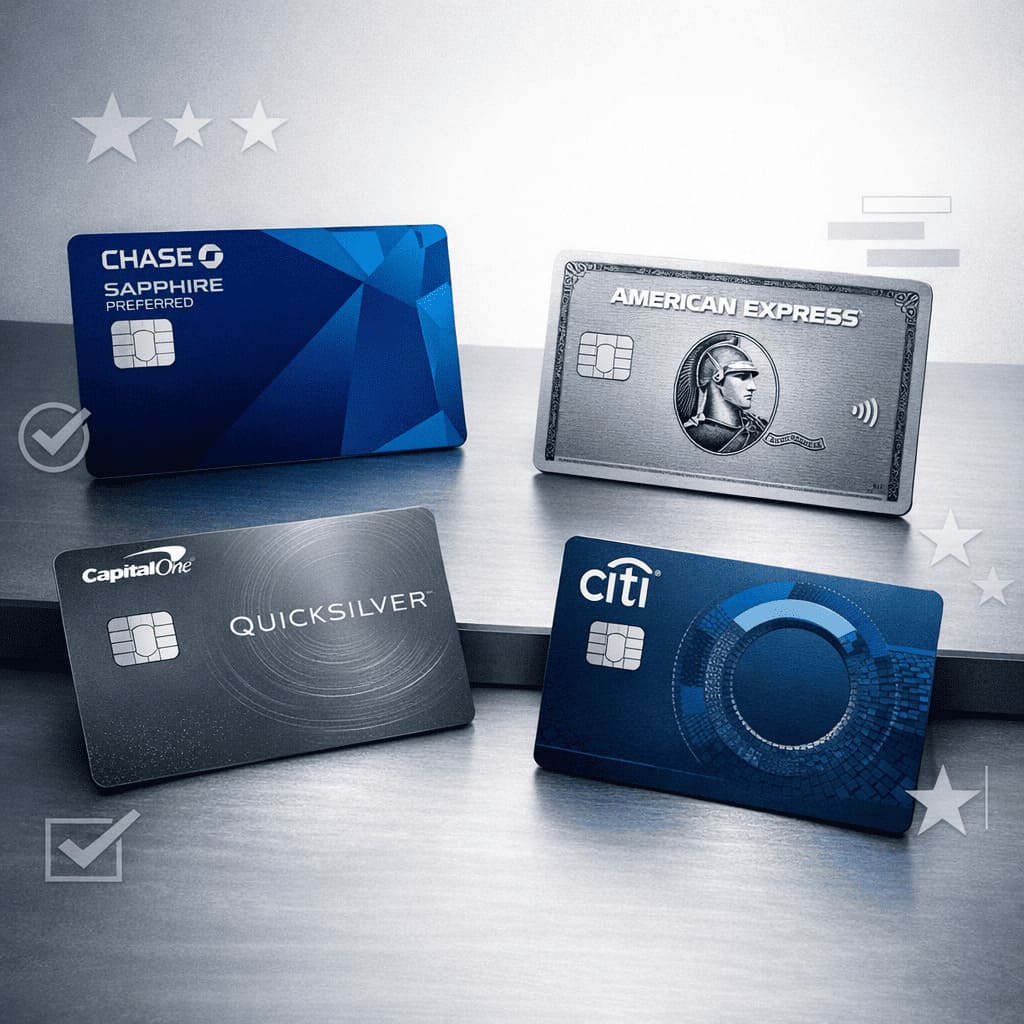
The Chase Freedom Unlimited delivers consistent cash back rewards without category tracking hassles. This card suits everyday spenders seeking simplicity and long-term value accumulation.

Recommended reads
Quick guides to help you compare cards and improve your credit profile.
Understanding approval factors and maximizing cashback requires strategic planning beyond basic card usage. Smart consumers leverage this card’s structure to build substantial rewards over time.
Core Cashback Structure Explained
Chase Freedom Unlimited offers 1.5% cash back on all purchases with no spending caps. The straightforward rewards structure eliminates quarterly category activation requirements that complicate other cash back cards.
New cardholders can earn a welcome bonus after meeting initial spending requirements. Current offers typically provide $200 after spending $500 within three months of account opening.
Enhanced Earnings Categories
The card features elevated earnings in specific categories that boost overall cashback rates. Cardholders earn 5% on travel purchased through Chase Ultimate Rewards and 3% at drugstores and restaurants.
These bonus categories stack on top of the base 1.5% rate for other purchases. Strategic spending in these categories accelerates reward accumulation without tracking quarterly rotations.
Chase Ultimate Rewards Integration
Freedom Unlimited points transfer to Chase Ultimate Rewards at one-to-one value. This integration becomes powerful when paired with premium Chase cards like Sapphire Preferred or Reserve.
Transferring points to airline and hotel partners can yield redemption values exceeding 2 cents per point. Without premium cards, points redeem at 1 cent each for cash back or statement credits.
Credit Score Requirements for Approval
Chase typically approves applicants with good to excellent credit scores above 670 FICO score. Strong credit history demonstrates responsible payment behavior and creditworthiness to the issuer.
Pre-approval tools on Chase’s website indicate likelihood of acceptance without hard inquiries. These soft checks help applicants gauge approval chances before formally applying for the card.
Income Considerations and Documentation
Chase evaluates total household income when assessing credit card applications for approval purposes. Applicants can include partner income, investment returns, and other verifiable income sources legally.
Higher reported income increases approved credit limit amounts and improves application success rates. Chase may request income verification documentation like tax returns or pay stubs during review.
Chase 5/24 Rule Impact
The infamous 5/24 rule automatically denies applicants who opened five or more credit cards across all issuers within 24 months. This Chase-specific policy limits approval regardless of excellent credit scores or income levels.
Business cards from some issuers don’t count toward 5/24 limits when they avoid personal credit report listings. Strategic applicants prioritize Chase cards before reaching the five-card threshold to maximize approval odds.
Existing Chase Relationship Benefits
Current Chase banking customers often experience smoother approval processes and higher initial credit limits. Established deposit relationships demonstrate financial stability and reduce perceived lending risk for the institution.
Chase may offer pre-qualified credit card offers to existing customers with strong account histories. These targeted promotions sometimes include enhanced welcome bonuses not available to general applicants.
Credit Utilization Strategy
Maintaining credit utilization below 30% across all cards improves credit scores and approval chances. Lower utilization ratios under 10% demonstrate responsible credit management to potential issuers like Chase.
Paying balances before statement closing dates reduces reported utilization on credit reports. This tactical timing helps maintain low utilization percentages without sacrificing convenient credit card usage.
Payment History Importance
On-time payments comprise 35% of FICO score calculations and heavily influence approval decisions. Chase reviews payment patterns across all credit accounts when evaluating new card applications.
Even one late payment within 12 months can trigger application denial or reduced credit limits. Setting automatic minimum payments prevents accidental missed payments that damage approval prospects.
Hard Inquiry Management
Each credit card application generates a hard inquiry that temporarily lowers credit scores by several points. Multiple inquiries within short timeframes signal credit-seeking behavior that concerns issuers about financial stability.
Spacing applications at least three months apart minimizes score impact and improves subsequent approval odds. Strategic applicants research thoroughly before applying to avoid unnecessary hard inquiries on credit reports.
Initial Credit Limit Expectations
Chase typically assigns initial credit limits between $500 and $10,000 based on creditworthiness and income. Higher earners with excellent credit scores often receive limits exceeding $5,000 at account opening.
New Chase customers may receive conservative initial limits that increase with responsible usage patterns. The issuer monitors account activity and may automatically raise limits after six months of positive payment history.
Credit Limit Increase Strategies
Cardholders can request credit limit increases through online banking after six months of account history. Chase evaluates current income, payment history, and account usage when considering increase requests.
Automatic increases occur when Chase detects positive account management and unchanged financial circumstances. Maintaining low utilization and consistent on-time payments triggers these automatic limit reviews favorably.
Annual Fee Advantage
Freedom Unlimited charges no annual fee, making it ideal for long-term wallet placement. The lack of annual costs means cardholders retain value even during periods of minimal spending.
This fee structure suits budget-conscious consumers and complements premium cards with annual fees. Pairing no-fee and premium cards creates a balanced Chase card portfolio for maximum reward optimization.
Balance Transfer Opportunity
New cardholders may receive 0% intro APR on balance transfers for 15 months. This promotional period helps consolidate high-interest debt while earning cash back on new purchases simultaneously.
Balance transfer fees typically run 3% to 5% of transferred amounts, requiring cost-benefit analysis. The interest savings during the promotional period often outweigh transfer fees for substantial debt consolidation.
Purchase Protection Benefits
Chase provides purchase protection covering eligible items against damage or theft for 120 days. Extended warranty protection adds one year to manufacturer warranties on qualifying purchases made with the card.
These protections add value beyond cashback rewards for major purchases like electronics or appliances. Cardholders should review specific terms and conditions on Chase’s official site for coverage details.
Travel Benefits Inclusion
The card includes travel accident insurance and baggage delay reimbursement when purchasing travel with Freedom Unlimited. Auto rental collision damage waiver provides secondary coverage for rental car damage in most states.
While less comprehensive than premium travel cards, these benefits add protection for occasional travelers. Strategic cardholders use Freedom Unlimited for everyday spending and premium cards for major travel bookings.
Mobile Wallet Compatibility
Freedom Unlimited works with Apple Pay, Google Pay, and Samsung Pay for contactless payments. Digital wallet integration provides enhanced security through tokenization and biometric authentication methods.
Contactless payments earn the same cashback rates as physical card swipes or chip transactions. Mobile wallet usage doesn’t affect reward earning or credit limit utilization calculations in any way.
Fraud Protection Features
Chase offers zero liability protection for unauthorized charges reported promptly to the issuer. Real-time fraud monitoring alerts cardholders to suspicious activity via text, email, or mobile app notifications.
The Chase mobile app allows instant card locking to prevent unauthorized use without closing accounts. These security features protect rewards and credit standing from fraudulent activity beyond cardholder control.
Foreign Transaction Fee Absence
Freedom Unlimited charges no foreign transaction fees on international purchases made abroad or online. This feature makes the card suitable for international travelers seeking simple cashback without currency conversion surcharges.
Earning 1.5% cashback on foreign purchases provides value that many competing no-fee cards lack. Budget travelers can use this card internationally without sacrificing rewards or incurring unnecessary fees.
Conclusion
The Chase Freedom Unlimited Card serves as a foundational cashback tool for strategic credit card users. Its approval depends on credit scores above 670, manageable debt-to-income ratios, and Chase’s 5/24 rule compliance.
Maximizing cashback requires understanding enhanced earning categories and maintaining responsible credit utilization below 30%. Pairing this card with Chase Ultimate Rewards partners unlocks premium redemption values exceeding basic cash back rates.
Long-term value comes from consistent usage, on-time payments, and strategic credit limit increases over time. The no annual fee structure ensures this card remains valuable regardless of spending patterns or economic circumstances.