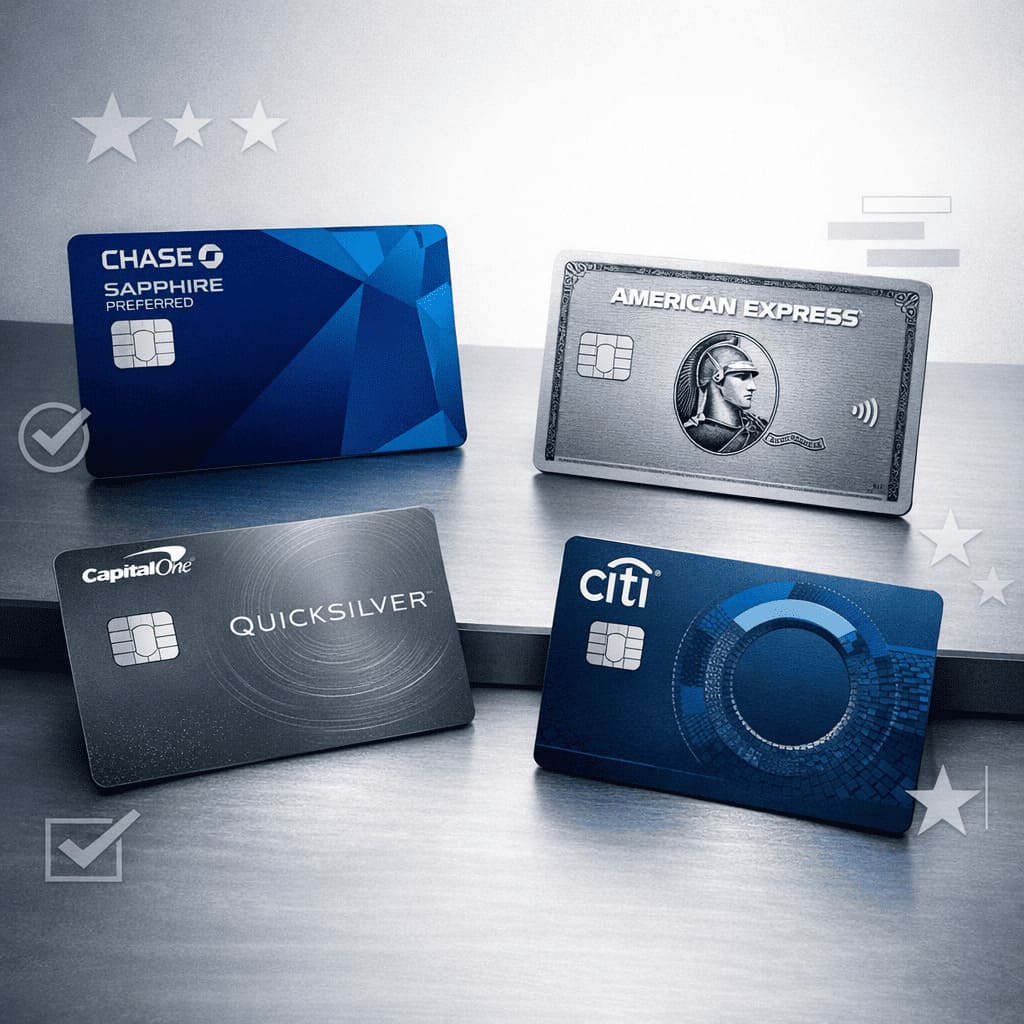
Getting approved for the Chase Sapphire Preferred requires preparation and understanding what Chase evaluates. Instant approval happens when your profile perfectly matches their underwriting criteria.

Recommended reads
Quick guides to help you compare cards and improve your credit profile.
The Chase Sapphire Preferred ranks among the most popular travel rewards cards available. Smart applicants research requirements thoroughly before submitting applications to maximize approval odds and secure competitive credit limits.
Minimum Credit Score Requirements
Chase typically approves Sapphire Preferred applicants with credit scores above 700. Excellent credit scores above 740 significantly increase instant approval odds and higher initial credit limits.
Your FICO score represents just one factor in Chase’s decision process. Payment history, credit utilization, and recent account openings matter equally when underwriters evaluate applications.
Understanding Chase’s Five-Twenty-Four Rule
Chase declines applicants who’ve opened five or more credit cards across all issuers within twenty-four months. This informal policy blocks even excellent credit applicants who’ve applied for too many cards recently.
Count all personal credit cards from any bank when calculating your five-twenty-four status. Business cards typically don’t count toward this limit, though they still appear on credit reports.
Pre-Approval Checklist Strategy
Visit Chase.com and check for pre-approved offers before formally applying. Pre-qualification uses soft credit pulls that don’t affect your credit score or count as applications.
Pre-approved offers indicate strong approval likelihood but don’t guarantee acceptance. Chase still performs hard inquiries and complete underwriting reviews after you submit formal applications.
Income Requirements and Verification
Chase doesn’t publish minimum income requirements but typically approves applicants earning above $30,000 annually. Higher incomes correlate with higher initial credit limits and faster approval decisions.
Report all eligible income including salary, bonuses, investment returns, and spousal income if applicable. Chase may request income verification through pay stubs or tax returns during application reviews.
Optimizing Your Application Timing
Apply when your credit report shows no recent hard inquiries or new accounts. Spacing applications at least three months apart demonstrates financial stability rather than credit desperation.
Check your credit reports before applying to ensure accuracy and dispute any errors. One incorrect late payment notation can mean the difference between approval and denial.
The Application Process Step-by-Step
The online application takes approximately ten minutes to complete with basic information ready. You’ll need your Social Security Number, annual income, housing payment amount, and employer information.
Chase decisions happen instantly for most qualified applicants meeting all criteria. Some applications enter pending status requiring manual review, typically resolving within seven to ten business days.
What Instant Approval Indicates
Instant approval means Chase’s automated underwriting approved your application based on credit bureau data. You’ll receive your card within seven to ten business days at your verified address.
Your initial credit limit appears immediately after approval in most cases. Limits typically range from $5,000 to $25,000 depending on income, credit history, and existing Chase relationships.
Pending Application Status Explained
Pending status means Chase needs additional verification before approving your application. Common reasons include income verification, identity confirmation, or reviewing recent credit activity.
Call Chase’s reconsideration line at the number provided in your pending notification. Speaking with underwriters directly often resolves issues and secures approval within minutes.
Denial Reasons and Solutions
Chase denies applications primarily for excessive recent accounts, low credit scores, or high debt-to-income ratios. The denial letter specifies exact reasons allowing you to address issues before reapplying.
Wait at least six months before reapplying after denial to improve your credit profile. Use this time to reduce utilization, avoid new credit applications, and build positive payment history.
Building Credit Limits After Approval
Chase evaluates your income, existing debt obligations, and payment behavior when setting initial limits. New cardholders typically receive conservative limits that increase over time with responsible use.
Your credit utilization ratio significantly impacts future limit increases. Keeping balances below thirty percent signals responsible use, while staying under ten percent looks even better.
Strategic Payment Timing
Make payments before statement closing dates to keep reported balances minimal on credit reports. Bureaus receive statement balance information, not actual spending, so timing protects scores.
Never carry balances month to month unless absolutely necessary for cash flow. Interest charges at variable APRs quickly erode any rewards value earned through spending.
Requesting Credit Limit Increases
Wait at least six months after approval before requesting your first credit limit increase. Chase prefers seeing consistent usage patterns and perfect payment history before granting increases.
Online limit increase requests sometimes approve instantly through automated systems. Denied requests typically allow reapplication after three to six months with improved financial metrics.
Income Updates Trigger Reviews
Report salary increases or new income sources through your Chase account profile. Updated income often triggers automatic limit increase reviews without requiring formal requests.
Your overall relationship with Chase matters for premium cards like Sapphire Preferred. Maintaining checking accounts or other credit products demonstrates financial stability that underwriters value.
What Reduces Your Credit Limits
Late payments trigger immediate concerns about financial stability and creditworthiness. Even one missed payment can result in limit reductions and blocked future increase requests.
High credit utilization suggests financial stress rather than strategic spending. Carrying balances approaching your limits makes Chase hesitant to extend additional credit regardless of payment history.
Sapphire Preferred Benefits Overview
The card earns two points per dollar on travel and dining purchases worldwide. General spending earns one point per dollar, making it ideal for travelers and restaurant enthusiasts.
Points redeem through Chase Ultimate Rewards at 1.25 cents each toward travel or transfer to airline and hotel partners. The transfer option often delivers values exceeding two cents per point.
Annual Fee Value Analysis
The $95 annual fee requires roughly $3,800 in bonus category spending annually to break even. Most cardholders easily exceed this threshold through regular dining and travel expenses.
Compare the annual fee against actual usage patterns before applying. If you rarely dine out or travel, cashback cards might deliver better value despite the Sapphire’s premium benefits.
Travel Protection Benefits
Chase includes trip cancellation insurance covering up to $10,000 per trip when you purchase travel with the card. Baggage delay insurance, lost luggage reimbursement, and emergency evacuation coverage provide comprehensive protection.
Rental car insurance provides primary coverage up to $75,000 worldwide. This benefit alone saves substantial money by allowing you to decline expensive rental counter insurance.
Earning Ultimate Rewards Points
Dining purchases include restaurants, bars, cafes, and food delivery services globally. Travel encompasses airlines, hotels, rental cars, trains, taxis, and even parking fees.
The broad category definitions make earning bonus points straightforward without tracking confusing subcategories. Most everyday travel and dining expenses automatically qualify for enhanced earning rates.
Transfer Partners Strategy
Chase partners with ten airline programs including United, Southwest, and Air France KLM. Hotel transfers work with Hyatt, IHG, and Marriott at one-to-one ratios.
Research transfer partner award charts before redeeming points to maximize value. Business class international flights often deliver values exceeding three cents per point through strategic transfers.
Combining with Other Chase Cards
Pair Sapphire Preferred with Chase Freedom cards to maximize total rewards earning. Freedom cards earn five points in rotating categories that combine with Sapphire points.
Points pool automatically across all Chase Ultimate Rewards cards under your name. This flexibility creates comprehensive strategies covering all spending categories at optimal rates.
Purchase Protection Coverage
Chase provides ninety days of purchase protection covering damage or theft up to $10,000 per claim. Extended warranty protection adds one year to manufacturer warranties automatically.
These protections work best for electronics, appliances, and expensive business equipment. Review the terms at the official Chase website to understand coverage limitations and exclusion categories.
Foreign Transaction Fee Policy
Sapphire Preferred charges zero foreign transaction fees on international purchases. This policy saves three percent on every transaction abroad or with foreign currency merchants.
The no-fee structure makes this card excellent for international travelers. Competitors often charge three percent fees that quickly erode rewards value on overseas spending.
Cell Phone Protection Benefit
Pay your monthly cell phone bill with Sapphire Preferred to activate phone protection coverage. Chase covers damage or theft up to $600 per claim with $25 deductibles.
This benefit protects expensive smartphones without additional insurance costs. File claims quickly after incidents and maintain purchase receipts for smooth processing.
Authorized User Advantages
Add authorized users for no additional fee while helping them build credit history. Authorized user accounts report to credit bureaus, benefiting young adults establishing credit profiles.
Monitor authorized user spending carefully to maintain low utilization ratios. Their purchases count toward your total balance and affect your credit utilization calculations.
Maximizing Signup Bonuses
Chase frequently offers signup bonuses requiring minimum spending within three months. Plan large purchases around application timing to meet requirements organically without manufactured spending.
Signup bonuses often represent the highest value opportunity when getting new cards. A typical 60,000 point bonus equals $750 in travel when redeemed through Chase’s portal.
Account Management Best Practices
Set up automatic minimum payments to ensure you never miss due dates accidentally. Payment history accounts for thirty-five percent of FICO score calculations.
Enable mobile app notifications for transactions, due dates, and unusual activity. Real-time alerts help catch fraud quickly and maintain awareness of spending patterns.
Long-Term Strategy Planning
Review your spending patterns quarterly to ensure Sapphire Preferred still matches your habits. Don’t hesitate to downgrade to no-fee Freedom cards if travel spending decreases significantly.
Build relationships with Chase by maintaining accounts in good standing over years. Long-term customers receive better treatment during reconsideration calls and limit increase requests.